A Love I Discovered at Infant's School
Updated: Aug 25

No, it wasn't alcohol!
In a previous post I described how, in part, my lifelong disinterest in sports took root while I was in primary school. Now, on the more positive side, I'm looking further back to infants' school, Fenton Manor Street, Infants' School, where the seeds were planted for my lifelong interest in music. An interest that became a passion, leading to a career and a lifelong love.
Being early post-WWII in England, there was not a lot of sophisticated equipment available to teachers. I was fortunate enough to have a teacher, Miss Jones, who was inventive. In those days medicine came in glass bottles. She collected a handful, all the same size, and hung them on a small, free-standing wooden frame. The bottles were filled with various amounts of water to give off different notes of the scale when struck with a spoon or a little wooden hammer. Each bottle had a different coloured sticker.
Oh, the thrill of being able to play a tune while one's classmates sang along. Of course, it wasn't long before Miss Jones introduced us to the basic note lengths. I enjoyed these moments so much that it wasn't long before I was playing those simple melodies on the school's only glockenspiel.

By the time I went off to Fenton Church of England Primary School, I was becoming quite confident at reading simple music. Though I was not keen on the Disney cartoons that were occasionally shown on our recently purchased TV, the music that was always in the background did catch my interest. I believe that's when I first began to enjoy the "William Tell Overture". It was often used in so many cartoons.
At primary school the world of music really began to open up. We had a large radio receiver in the classroom. The BBC school and youth radio progamming included participatory music-making, folk traditions and structured listening. Each programme was beautifully outlined in a glossy booklet that contained lavishly printed materials so that we could follow along. They contained actual sheet music, song lyrics and interactive exercises. I remember learning, In English, the music and words to Humperdinck's "Hansel and Gretel"; the themes to Haydn's String Quartet, Op. 76, No. 3 in C major; the operettas of Gilbert and Sullivan; Beethoven's "Pastoral Symphony", Mozart's "Magic Flute"; the ballet, "Petrushka" and countless other renowned classical pieces. Little did I know then how I would later be playing them with various performing groups.
I still smile when I hear parents joke lightly that their kid is driving them crazy because the school has let them bring a descant recorder home. Well, it was about this time too that we had recorder lessons. However, since there were only enough recorders for one class, we had to dip the mouth pieces in Dettol disinfectant at the end of each session.
I enjoyed those lessons and instead of borrowing one to take home to practise, thanks to what I thought was a very generous donation of birthday money from my brother Terry, I bought a lovely rosewood Dolmetsch recorder, which I still have, along with a Hohner Solo- Luxus and an Aulos (511-E) Tenor recorder that I purchased later in life.
I taught myself outside of class lessons and found I was getting quite good at reading more complicated music.
So why didn't I begin to go "mainstream" and learn to play the piano? There is a very good reason. We lived in a two-up, two-down terraced house. Now I know that won't mean much to my American friends. By way of explanation, it's a very modest, old, terraced house, featuring two rooms on the ground floor, and two bedrooms upstairs. In our particular case, the front downstairs room, had been converted into a store. There was just no room for a piano.
My parents had learned that I liked the piano accordion, an instrument that was very popular at the time. I particularly liked the full sound, almost orchestral in a way, that the accordion could produce.
My first accordion, however, was a 12-bass, so was limited as to what it could do but it was a good way to be introduced to the instrument, and it did mean that I was able to widen my musical horizons. There was no stopping me. I played everything I could get my hands on, from an old book of Caruso's favourite arias to Broadway musicals, popular songs from the Big Bands and current Top 10 Hits. Call me eclectic in my musical tastes and you'd be correct. I saved my weekly, six-pence pocket money to buy sheet music. A piece of sheet music in the late 1950s was about two-shillings and six pence; five times my pocket money! Going into Sherwin's music store on Saturday mornings was something quite exciting for a young music enthusiast.
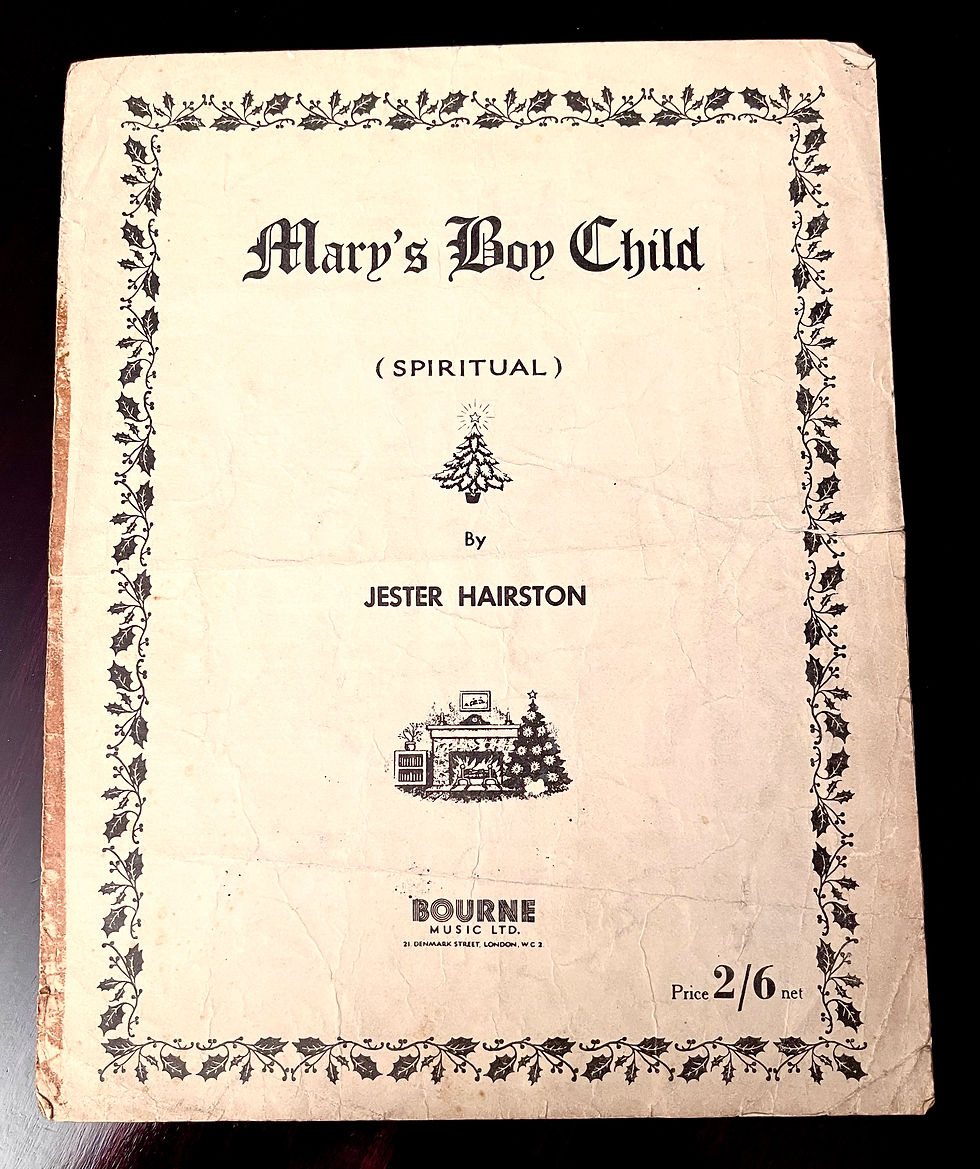

I think I must have impressed Mum and Dad to some degree. It wasn't long before they invested in buying me a bigger instrument, a large, shiny, 24-bass accordion. This one was covered in mother of pearl designs and had a slide bar behind the treble keys allowing me to change the "voice" of the instrument. This young lad was totally enjoying his new hobby.
When I wasn't doing homework or studying for my 11+ plus tests, which if I passed, I could go to grammar school, I was practising upstairs. I know Mum and Dad much preferred this to the sound of my descant recorder because often I'd hear one or both of them singing along to a song I was playing, especially if it was from the 1940s.
It would be a short time before I was off to grammar school. Yes, I passed my tests. I wondered where my musical abilities would take me or, indeed, would I be able to continue to spend so much time enjoying and developing my skills. After all, high school meant three homework subjects a night of at least forty minutes each along with two hours at the weekend. Would I even have the opportunity to go into town and visit Sherwin's Music Store? You know that the answer is another story.



Your early exposure to music was key to your journey. It's a shame that public school music programs have been defunded. But hey, that's more dollars to allot to sports.
Very good story!
Great story. Very Dicksonian. :)